
Move from survival to safety.
We recognize that trauma is defined not just by the objective events that occur, but by how you subjectively experience those events.
Our approach integrates empirically supported methods with individualized care, utilizing both psychodynamic and cognitive-behavioral trauma interventions.

Laying the Groundwork
Before processing trauma, we establish the conditions necessary for healing.
Establishing Safety
Before processing trauma, we collaborate to ensure you feel physically and emotionally safe in your daily life.
Building Structure
We create a predictable therapeutic environment with clear time limits and signals to stop, ensuring you maintain control over the pace of your work.
Equipping for Coping
We focus on individualized techniques to help you self-regulate, utilizing sensory grounding, breathwork, and progressive muscle relaxation.
Understanding Your Brain
Trauma affects how your brain processes and stores memories.
Traumatic Memory Storage
Traumatic memories differ from ordinary memories because they are often fragmented, disorganized, and lack narrative coherence.
The Amygdala & Hippocampus
We help you understand the brain's biological responses, such as heightened amygdala activity and how the hippocampus can cause new contexts to blend with old trauma.
Time Perception
We explore how trauma can distort time, causing safe contexts to trigger prolonged fear responses.
Evidence-Based Treatment Strategies
We develop a personalized clinical strategy informed by your unique developmental history, cultural context, and values. Our clinicians integrate several scientifically tested, gold-standard treatments shown to produce reliable improvements.
CBT with a Trauma Focus (CBT-T)
We identify and challenge unhelpful thinking patterns while building stress management skills.
Cognitive Processing Therapy (CPT)
We identify and restructure maladaptive trauma-related beliefs, or "stuck points," to reduce emotional suffering like guilt and shame.
Prolonged Exposure (PE)
We help modify pathological fear structures through repeated exposure to safe trauma reminders until distress decreases.
Eye Movement Desensitization and Reprocessing (EMDR)
We use bilateral stimulation to help your brain reprocess memories so they feel less distressing and securely in the past. (Designer Note: Do not use generic 01, 02, 03 numbering or icons for this list; use clean, bold headers for each treatment.)

Trauma-Focused Clinicians
Our team specializes in evidence-based trauma recovery. Each clinician brings deep expertise in processing difficult memories with care and precision.

Samantha Su, LPCC
Anxiety
Depression

Barb Dible, LPCC
Anxiety
Depression

Brittney Melendez, LPCC
Career Counseling
Life Transitions

Addie Marler, LPCC
Depression
Anxiety

Aparna Natarajan, LMSW
Depression
Anxiety

Benjamin Carter, MHC-LP
Relationship Issues
LGBTQ+ Issues

Mia Smith, LPCC
Anxiety
Self Esteem
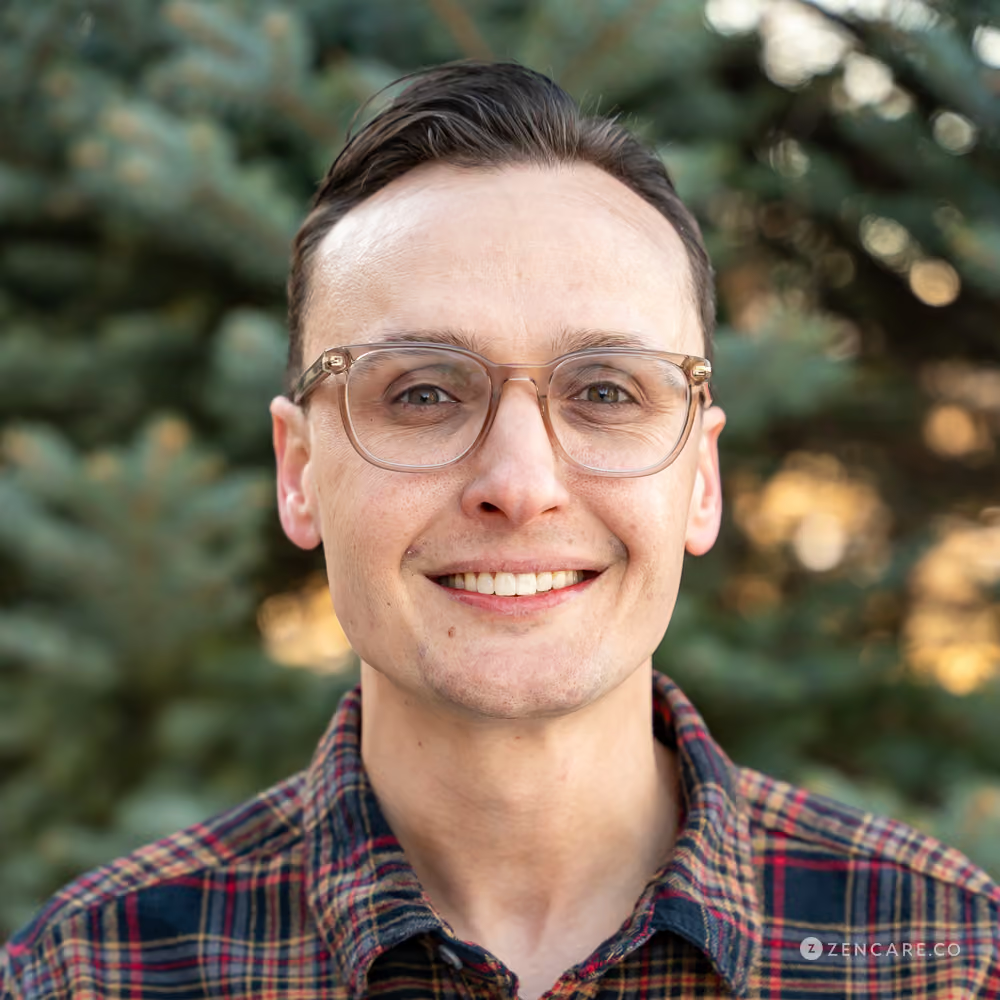
Dr. Riley Harper, Ph.D. PSYC
ADHD
Life Transitions
%20(1).avif)
Ann Erisman, LPCC
Trauma and PTSD
Grief

Mallory Bodker, LMSW
Anxiety
Depression
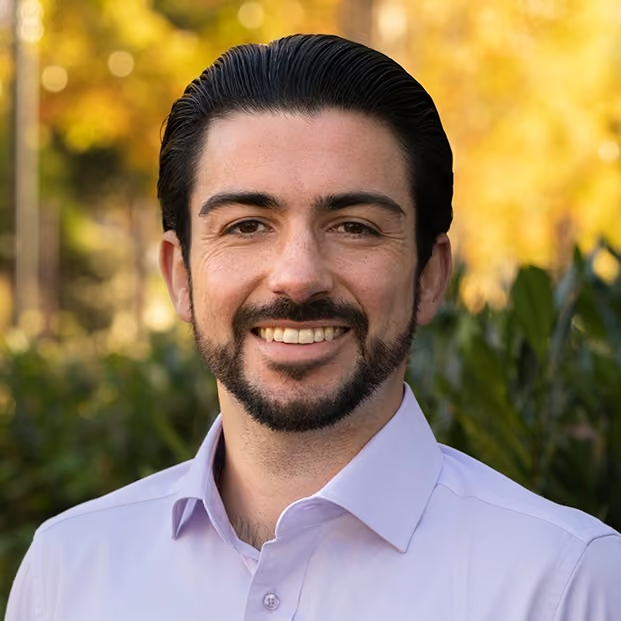
︎︎︎Dr. Andrew Silipo, Psy.D. LP
Self Esteem
Anxiety
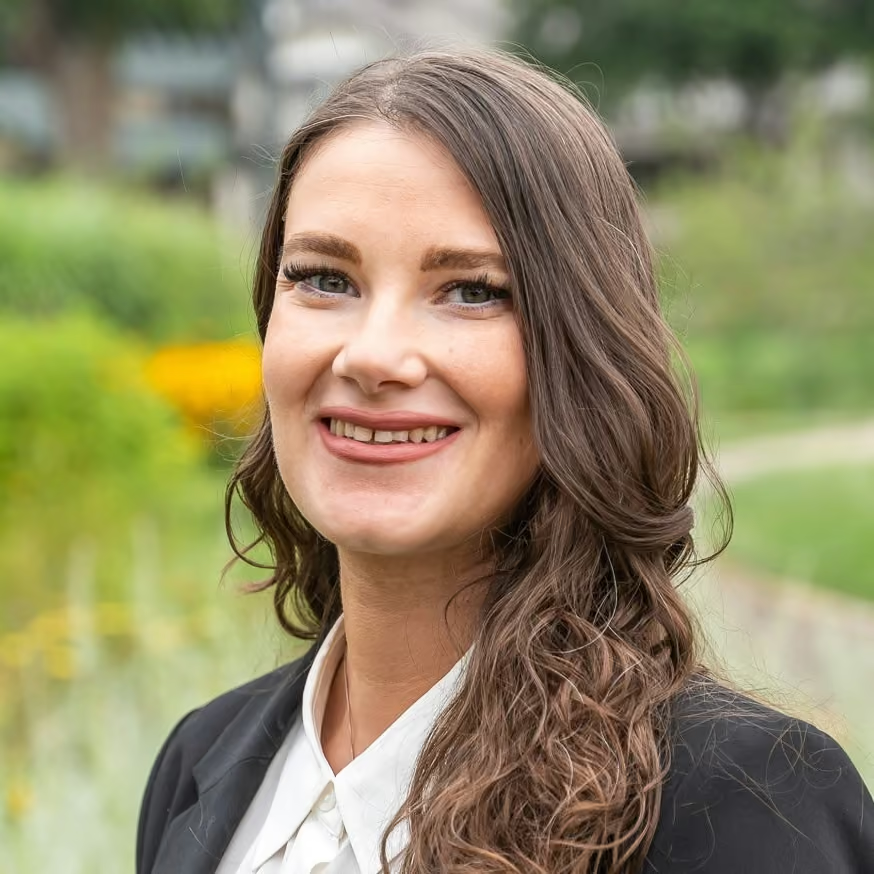
Ella Martin, LPCC
Anxiety
Stress

Alicia Riggs, LPCC
Trauma and PTSD
Anxiety

Ningyuan Tang, MHC-LP
Anxiety
Depression

Yufei Liu, MHC-LP
Mood Disorders
Trauma and PTSD

Stewart Schweinfurth, LMSW
Anxiety
Depression

Lisa Lindsey, LCAT
Life Transitions
Mood Disorders
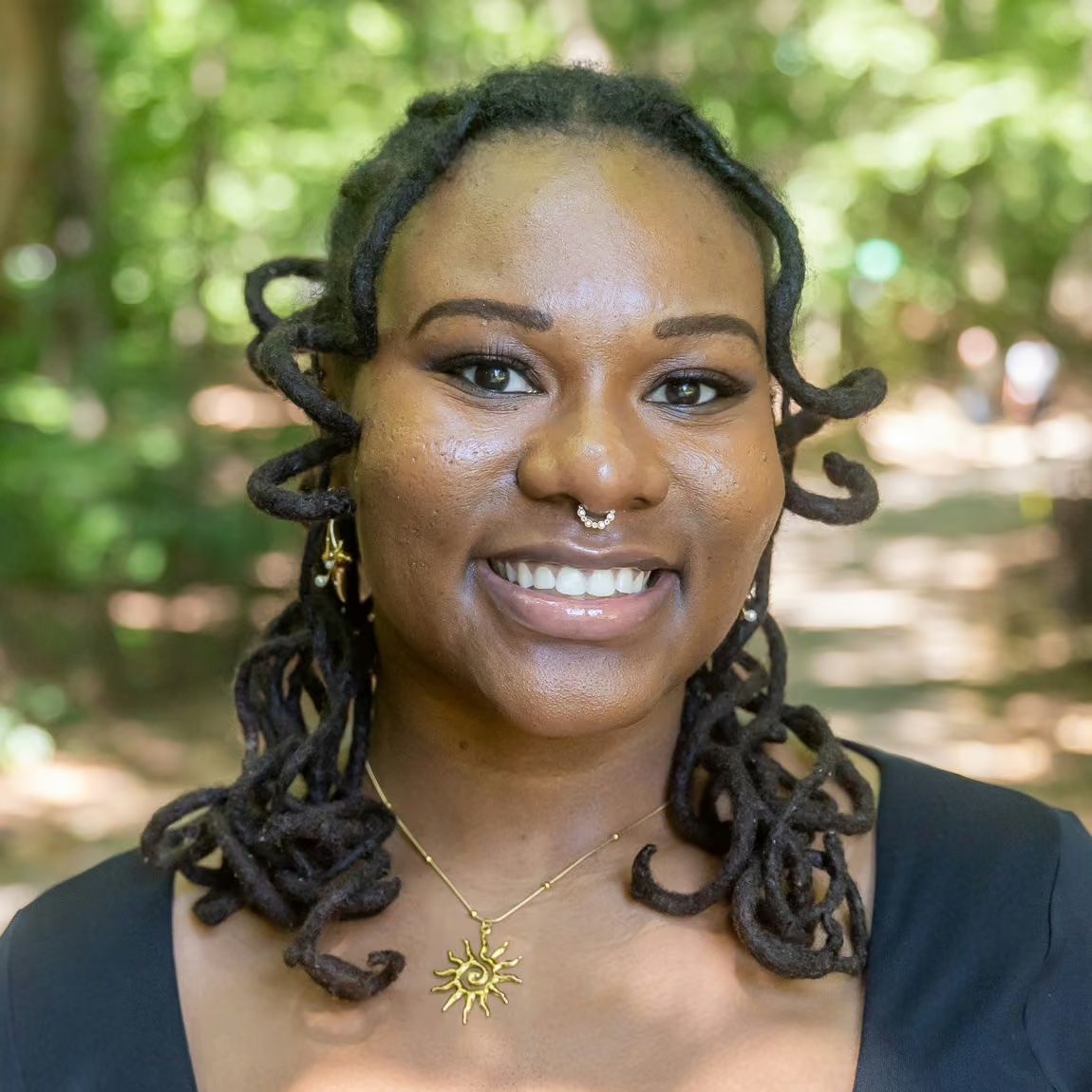
Erica McDonald, LMSW
Anxiety
Depression

Jingyi Liao, MHC-LP
Anxiety
Depression

Tanya Ilela, LPC
Trauma and PTSD
Anxiety

Lisha Dash, LMSW
Anxiety
Depression
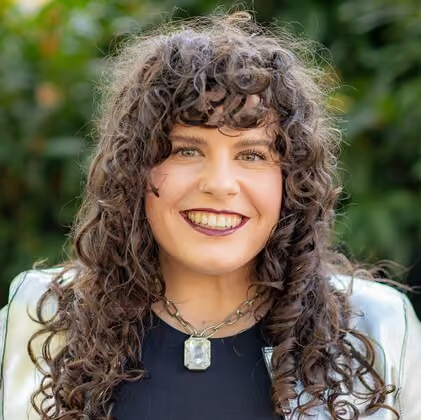
Victoria Gagliano, LMSW
Anxiety
Depression

Alice Gong, LMSW
Anxiety
Depression

Brian Mindlin, LMSW
Depression
Anxiety
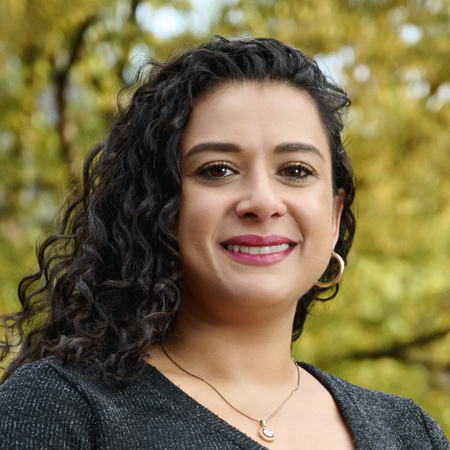
︎︎︎Tala Abu Rahma, LMSW
Anxiety
Grief

︎︎︎Tyara Dabrio, MHC-LP
Anxiety
Depression
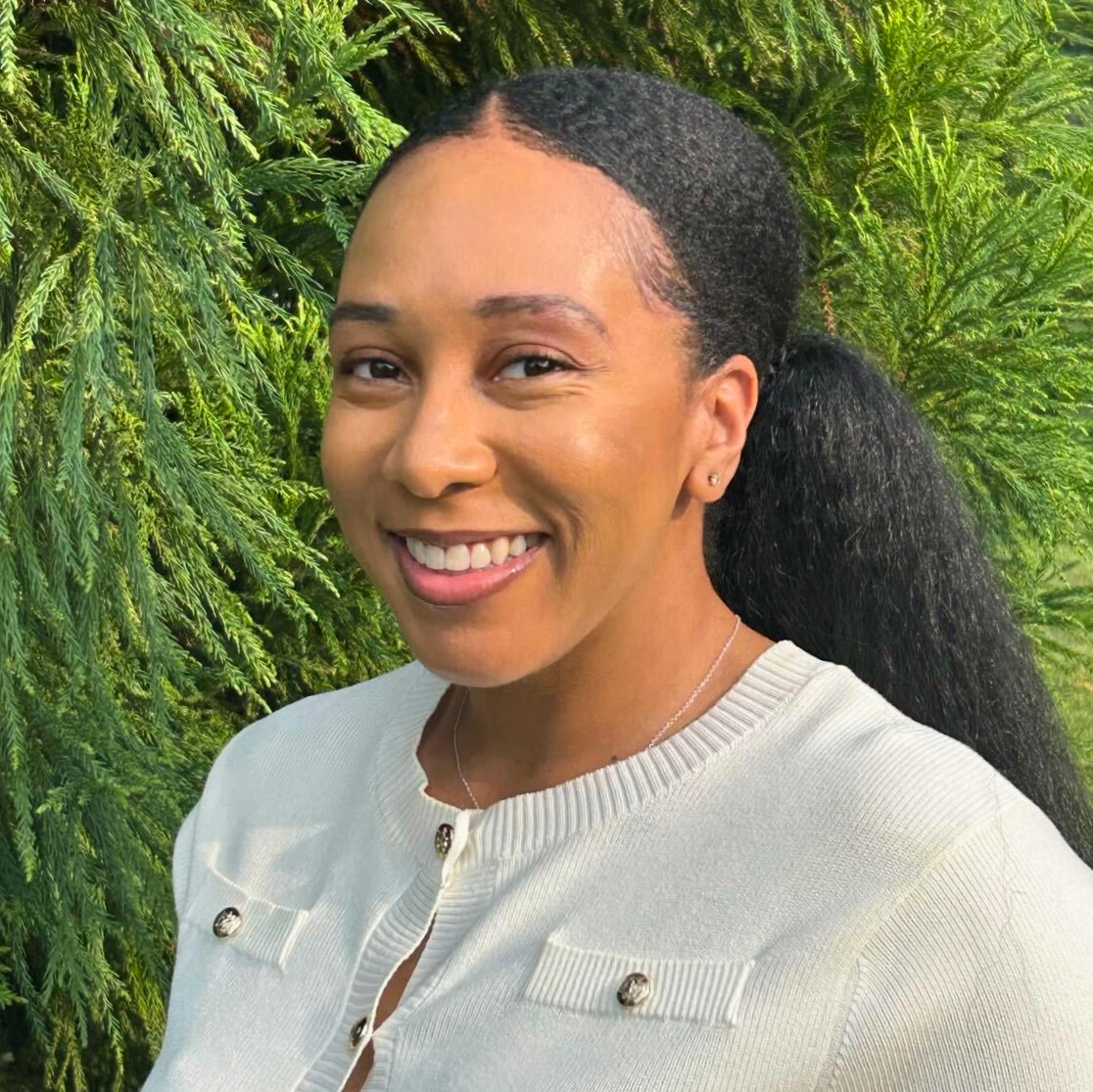
︎︎︎Dr. Ang Romulus, Psy.D.
Self Esteem
Depression

︎︎︎Cheyenne Mullan, LPC
Anxiety
Depression

︎︎︎Sadaf Hasnain, LMSW
Anxiety
Racial Identity

︎︎︎Jennifer Cook, LCSW
Depression
Anxiety

︎︎︎Michael Pollet, CSWA
Anxiety
Depression

︎︎︎Dr. Allyson Cole, Psy.D.
Mood Disorders
Relationship Issues
Begin your narrative shift.
We are currently accepting new trauma recovery clients for both in person and telehealth sessions. Our intake process is designed to be low-friction and respectful of your history.

